The Libbey Flare 16-Piece Set: A Hosting Staple for Every Table
-
Libbey Flare 16-Piece Set: How to Turn a Box of Glasses into a Hosting Tool
-
Tumblers and Rocks Glasses: How the Pairing Covers Every Pour
-
Durability by Design: How Libbey's Foodservice Roots Make a Home Set Last
-
Hosting with the Set: How to Match Glassware to the Moment
-
After the Party: How to Care for Glasses That Earn Their Place
The first real test of a glass set isn’t the store shelf. It’s the moment when a group of people drifts into the kitchen, someone reaches for a glass, and you realize the only ones left are from a box you bought for a party two years ago. You see the dishwasher getting loaded by a guest, and you know the next search for a clean glass will start after the load finishes. So when you open a carton marked Libbey Flare, you’re not just unpacking glassware; you’re deciding whether this round of drinks becomes another disposable moment or something closer to a gathering that gets repeated. The box sits on the counter with the weight of a purchase you intend to keep, and you can already imagine the summer calendar marking its first barbecue.
Libbey Flare 16-Piece Set: How to Turn a Box of Glasses into a Hosting Tool
You’ve just done the arithmetic on last year’s disposable cups: buying new ones for every barbecue costs more than a decent set would have, and they never quite survive the evening. When Libbey talks about its tableware, it starts with a promise that people who gather to share a meal are “making memories.” That phrasing sounds like marketing until you use it as a checklist: the glasses have to survive being passed around, rested on uneven patio tables, stacked in a crowded sink, and pulled out of the dishwasher while still warm. The Flare set is the kind of answer that moves the job from “tableware” to “hosting tool.” Instead of guarding a box of fragile glasses, you set out eight tumblers and eight rocks glasses, knowing there are enough to cover drinks, water, and the occasional refill without anyone having to ask where the good glasses are.
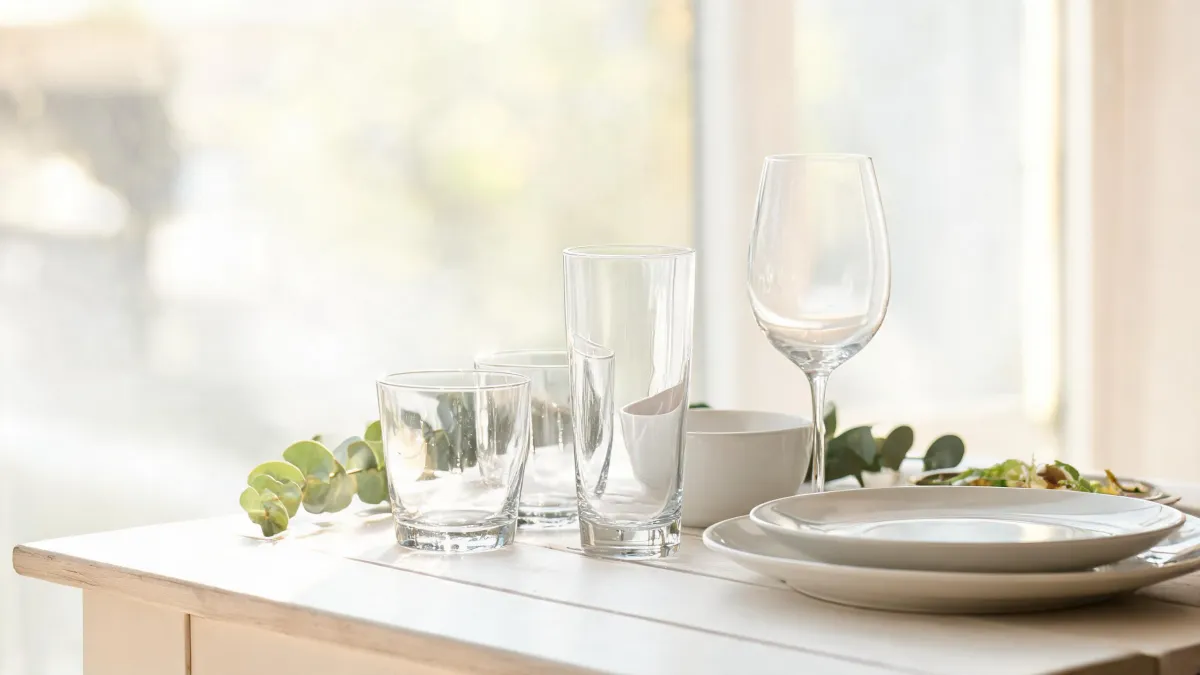
So the question becomes: what does a sixteen-piece collection actually give you beyond a matching pattern? With eight tumblers and eight rocks glasses, you can serve a cocktail, a water refill, an iced tea, and a second round before you need to run a wash cycle. The number isn’t about having sixteen different glasses; it’s about having enough of the right shapes to keep a conversation going. When a neighbor shows up with a bottle of something special, you can reach for a rocks glass without hunting through the cabinet. When the kids want lemonade, you can grab a tumbler and not worry about the rim. The count solves a hosting problem that small sets never address: the moment when you need a third piece of glassware before the first two are safely in the dishwasher.
That hosting ease is the real thesis, and Libbey’s history is why it holds up. The company has been making tableware since 1818, which is more than two centuries of building glass for kitchens, bars, and dining rooms where breakage is a cost, not an accident. That kind of lineage matters when you’re choosing between a cheap starter set and something that behaves like equipment. The Flare set doesn’t merely look presentable; it treats the home table the way a commercial kitchen treats its dish rack, which is why the packaging promises that these glasses can last through backyard barbecues and everyday use. Once you accept that durability is the design priority, the glass count becomes a side note. The link between that commercial durability and your own table turns the decision from a style question into a practical one: once you accept that the glass is meant to be used, the way you host changes.
Tumblers and Rocks Glasses: How the Pairing Covers Every Pour
A rocks glass and a tumbler look similar, but the distinction is functional. The rocks glass, sometimes called a lowball, has a heavier base and a shorter profile, which keeps a spirit or an Old Fashioned honest without tipping over. The tumbler, taller and lighter, is the workhorse for water, iced tea, juice, and the kind of cocktails that need room for a big sphere of ice. Libbey’s own framing likes to say the best tabletop solutions begin with the menu in mind, and that’s the right lens here: you’re not merely collecting glasses, you’re choosing a set that can carry everything from a post-work pour to a Sunday brunch. The set’s eight-and-eight split gives you a covered base for both ends of the spectrum, so you don’t have to rummage for a separate set when the occasion moves from the coffee table to the patio. Both shapes share the same thick-walled design, which is what lets you listen for the clink instead of reaching for a broom.
The condition that makes this pairing work is a simple one: each glass has a job, and neither is typecast. A rocks glass can hold a neat pour, but it can also hold a small scoop of ice cream or a handful of almonds on a watching-night. A tumbler can serve a cocktail, but it earns its keep when someone asks for water or a soft drink between rounds. In a sixteen-piece set, you have the freedom to ignore the labels. You end up with a working set where the difference between shapes is less about formality and more about physical comfort: the shorter glass suits a hand that wraps around it; the taller one suits a hand that wants to hold a full drink without crowding the rim. That condition matters because it makes the set feel flexible enough for a Tuesday dinner and a Saturday cookout without changing the rules.
Project that flexibility forward, and you get the real use case: a set that grows with your calendar. During a holiday week, the eight tumblers become the water glasses for a long table, and the eight rocks glasses carry the whiskey and eggnog. On a normal night, you use two of each and leave the rest in the cabinet. Libbey’s durability pitch lines up with this future because the set is meant to be used, not curated. The same glasses that survive a busy backyard barbecue can make it through a week of school lunches, and the condition that unlocks that longevity is the glass’s ability to handle real wear. If you’re the kind of person who tends to buy a few glasses at a time, a sixteen-piece set feels like overkill; if you’ve ever run out of clean glassware in the middle of a party, it feels like the end of that problem.
Durability by Design: How Libbey's Foodservice Roots Make a Home Set Last
Durability is the claim the evidence keeps coming back to. Libbey says its tabletop solutions are a top choice for foodservice professionals and home entertainers alike, then backs it with a promise about surviving the busiest bars and wildest backyard barbecues. That sentence does the job of two paragraphs because it challenges the usual assumption that home glassware and commercial glassware belong in different categories. The same company that makes pint glasses for bars and water tumblers for diners is making a sixteen-piece set for your patio. When you hear that something is “foodservice grade,” you usually expect a no-frills design, but the Flare set brings that toughness to a shape that doesn’t look institutional. The design proof is in the base: you can feel the weight without sensing fragility, and that weight is what lets the glass get knocked, jostled, and handed around without turning the party into a search for shards.
The cause behind that toughness is a company that has spent more than two centuries selling glass to places where a broken tumbler means a lost customer, not a minor inconvenience. Libbey’s history, which it traces to 1818, gave it a head start on understanding what glass has to survive: commercial dishwashers, bartenders who move fast, busy trays, and the occasional clink of a toast. That experience is the hidden ingredient in the Flare set. The same company that solved durability for restaurants applies the calculus to home entertaining, where the stakes are lower but the sentiment is higher. When I look at the set, the cause-and-effect sequence is clear: the glass is engineered for a context where breakage is expensive, and that makes it a better fit for a backyard than a set designed for showing, not using. The effect is that “Made to Last” stops being a slogan and becomes a usable promise for the next season of dinners.
The natural counter is that a heavier glass feels more breakable, not less. A wine glass with a stem will snap under pressure; a sturdy tumbler can feel like a trophy when you knock it against a faucet. But the Flare set anticipates that concern by balancing thick walls with a shape that isn’t clumsy. The rocks glasses have enough heft to feel stable, and the tumblers aren’t so tall that they threaten to topple when empty-handed guests rest them on an armrest. The durability isn’t armor; it’s design that avoids the failure points you see in cheaper glass: rims that chip, bottoms that wobble, thin walls that crack when a tray of ice is dropped in. If you’re still uneasy, the right test isn’t dropping one on purpose; it’s simply putting them through a real week of use and seeing whether you still think about the glassware after the first evening. Most people stop worrying, because the glass does its job.
Hosting with the Set: How to Match Glassware to the Moment
Put the set on a drink station next to a bowl of ice and cold bottles, and you’ve created a scene where guests help themselves. That’s the application that separates a collection from a system. When you host with the Flare set, you’re not a bartender; you’re a host who has already set out the right tools. The eight rocks glasses sit next to the brown spirits, and the eight tumblers sit next to the water pitcher and the iced tea. Guests can reach, pour, and move on without waiting for you to find a clean glass. The memory-making promise Libbey uses on its page fits here: you’re making the moment easier, not harder. Because the glasses are sturdy, you don’t need separators or a guarded storage spot. The set treats the party itself as the reason it exists, which is why hosting becomes less about logistics and more about the conversation.
The behavior that unlocks this ease is a simple shift: don’t save the glasses for an occasion. If you treat the sixteen-piece set as a normal, everyday glass collection, you’ll stop mentally rationing them. The condition that makes hosting work is that the good glassware is the default, not the exception. When the set is in reach, you grab a Flare tumbler for your own water at lunch, use a rocks glass for an evening drink, and leave the dishwasher load for tomorrow instead of hunting for a clean cup. That habit pays off at the next gathering, because the glasses are already part of your routine. It also changes your perception of breakage: when you use them daily, an occasional chip becomes a surprise, not a looming disaster.
The payoff is a simple kind of confidence. You’re not holding your breath when someone reaches for a glass; you’re just watching the scene work. Libbey’s positioning as a foodservice solution means the set was built for a table that can’t afford to pause, and that becomes the emotional payoff at home. The payoff is also practical: you stop buying disposable cups for parties, and you stop mentally deducting the cost of every broken glass from your hosting budget. In the moment that matters, the difference is visible. A guest raises a rocks glass with a proper pour, the glass looks intentional in their hand, and the gathering feels less like a series of borrowed plastic cups and more like a real dinner. That’s a small thing, but it’s the difference between hosting and just having people over.
After the Party: How to Care for Glasses That Earn Their Place
Care is the part of ownership that decides whether the “last a lifetime” claim actually comes true. With the Flare set, the maintenance routine is straightforward: hand wash or use the top rack of the dishwasher, avoid sudden temperature changes, and be careful about stacking so the rims don’t knock. Libbey’s own copy says that with proper care, its products can last a lifetime, and that’s the kind of statement that becomes a maintenance blueprint. If you’ve ever chipped a glass by dropping a spoon into it, you’ll find the thicker rim of these tumblers forgiving. The guidance matters because a glass that survives the first three years becomes the set you pass down to a kid’s first apartment. The simple act of drying tumblers before they go back in the cabinet preserves the finish, and using a felt pad on the shelf keeps the bases free of scuff marks.
Legacy is a word that doesn’t usually apply to glassware, but it should. Libbey’s own tagline about a 200-year history and an agile modern workplace is about the company, yet it also frames the product: a set made responsibly and built to stay until you choose to replace it. When you reframe the purchase as an heirloom rather than a consumable, you stop treating the glasses as disposable. A set that survives a decade of family dinners changes the math entirely; a cheaper set might require replacing chipped glasses every few months. The Flare set asks you to care for it, and in return it stays part of your daily life. That’s the kind of longevity that gives a home kitchen character, and it’s a better argument than “cheap enough to replace.”
The first weekend you unboxed this set, you treated it like fine china. By the next summer, you’ll find yourself handing a rocks glass through the crowd without a thought. That transformation is what Libbey’s quiet, everyday language is really about. Its company materials talk about valuing new ideas and bringing your best to the table every day, which is corporate-speak for a simple promise: the set isn’t a one-season novelty. A company that has been at the table since 1818, and that treats collaboration as fundamental, builds glasses to stay in use. So when the cookout ends and the last tumbler goes back in the cabinet, the set isn’t finished; it’s waiting for the next time someone reaches in and doesn’t have to hunt for a clean glass. That’s the durability promise doing its job, and it’s why sixteen pieces can feel like an intentional choice rather than a starter kit.
That’s the moment the Flare set earns its place: when the glass is already in hand, and the only thing that matters is the conversation it holds.

Ingrid Falk
Ingrid Falk is an outdoor living products analyst specializing in fences, pergolas, gazebos, canopies, greenhouses, shade sails, patio sets, outdoor sofas, and weatherproof cushions. She uses ISO 4892-2 and ASTM G154 weathering methods while comparing UV color change, coating adhesion, corrosion resistance, frame load, joint stability, water shedding, and dimensional movement. Her work helps garden retailers, project buyers, and hospitality operators select structures and furniture suited to wind exposure, climate, installation method, maintenance, and expected occupancy.
Leave a Reply