Classic Libbey Paneled Tumblers: A Durable Choice for Everyday Entertaining
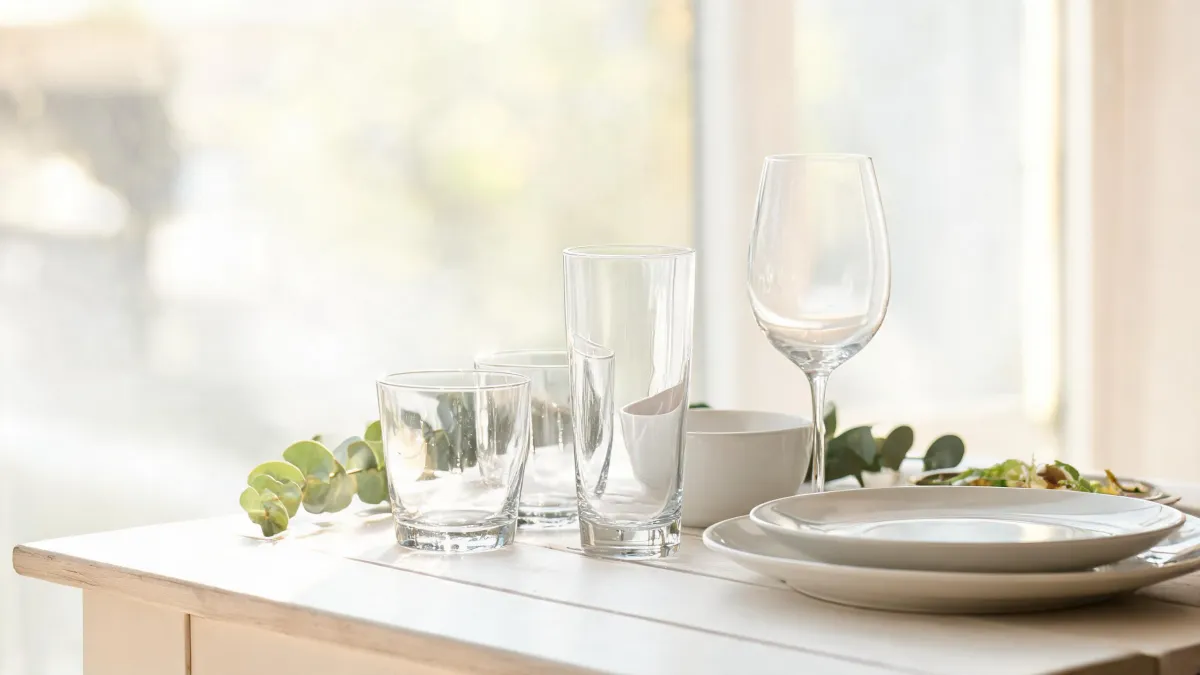
This set won't win a beauty contest, and that's exactly why it deserves a place on your table. I'd argue that before you spend more on stemless wine glasses that chip at the first knock, you should give the Libbey paneled tumbler a serious look—not because it's fancy, but because it's built for the way most families actually drink. Ask yourself how many times you've reached for the 'good glasses' only to put them back because you're in a hurry or worried about breakage. This set sidesteps that dilemma by being both sturdy enough and ordinary enough to use every day. The real question isn't whether this glass will impress your guests; it's whether you value a tumbler that can survive a backyard barbecue and still look presentable for a birthday toast. That tradeoff between elegance and everyday stability is one most buyers never consciously make, and it's the reason so many pretty glasses end up relegated to a top shelf.
A Classic Glass That Demands a Decision
This six-piece set won't win a beauty contest, and that's exactly why it deserves a place on your table. I'd argue that before you spend more on stemless wine glasses that chip at the first knock, you should give the Libbey paneled tumbler a serious look—not because it's fancy, but because it's built for the way most families actually drink. Ask yourself how many times you've reached for the 'good glasses' only to put them back because you're in a hurry or worried about breakage. This set sidesteps that dilemma by being both sturdy enough and ordinary enough to use every day. The real question isn't whether this glass will impress your guests; it's whether you value a tumbler that can survive a backyard barbecue and still look presentable for a birthday toast. That tradeoff between elegance and everyday stability is one most buyers never consciously make, and it's the reason so many pretty glasses end up relegated to a top shelf.
People assume a budget-friendly six-piece set must feel flimsy, or that Libbey's foodservice heritage means the glasses are plain. Neither assumption holds when you look at the company's track record. Libbey has been making tableware since 1818, and it explicitly markets its products as durable enough for both foodservice professionals and home entertainers. The company's own material talks about withstanding 'the busiest bars and wildest backyard barbecues,' which suggests the design was tested against chaotic conditions, not just quiet dinner tables. That's a meaningful distinction: a glass made for commercial use has to survive constant dishwashing, stacking, and the occasional drop behind a crowded bar. If you're worried that a six-pack at this price point must feel thin, the brand's two-century history is a reasonable counterweight—though you should still handle any glass with care, because no tumbler survives being dropped on concrete. That history also means the company has seen trends come and go, and it's still here for a reason.
The tradeoff most people miss is that classic styling often comes with a hidden benefit: the paneled design gives your hand something to grip, which matters more than you'd think with wet hands. Libbey's 'beautiful, durable products for the home' line suggests they're aiming for both looks and longevity, but the paneled texture is a specific construction detail that improves handling—and it also hides water spots better than smooth cylinders. When you're choosing between a trendy stemless glass and this traditional tumbler, you're not just picking aesthetics; you're picking how well it performs in real life with condensation, soap residue, and the occasional fumble. The panels break up the smooth surface, giving your fingers a natural place to hold even when the glass is slick from a cold drink or a sweaty handle. That's the kind of practical detail that only becomes apparent after you've used it for a month, but it's worth weighing before you buy.
Why the Paneled Tumbler Outperforms the Trendy Options
Now let's put the paneled tumbler next to the trendy options—stemless wine glasses, faceted tumblers from newer brands, and even textured drinking glasses that cost three times more. The comparison framework has three parts: durability, grip, and how the glass looks after a year of dishwasher cycles. On durability, a straight-sided paneled tumbler has fewer stress points than a thin-walled stemless glass, which can crack where the bowl meets the stem. On grip, the panels create friction that your fingers can hold even when the glass is slippery. And on appearance, the classic shape won't win any Instagram contests, but it also won't look dated the way some over-designed glasses do. You're also getting a glass that stacks easily, which saves cabinet space—a practical advantage that doesn't show up in product photos.
The durability argument gets a boost from Libbey's own claims about its foodservice heritage. The company says its tabletop solutions are a top pick for restaurants and home hosts alike, and that's not just marketing: if a glass can survive the constant cycle of a restaurant dishwasher and being stacked in a bar, it's likely to handle a family dinner. That doesn't mean you should treat it like indestructible; it means the engineering and quality control were designed for high-traffic use. For a home buyer, that translates into fewer replacements and less anxiety when guests knock a glass over. The same glass that holds up in a busy restaurant is the one you can trust with iced tea on a hot patio or with kids' juice cups at a birthday party. It's reassuring to know that the 200-year-old company behind it has a track record of meeting professional standards. And when a company has been making glass since 1818, it has had ample time to learn what breaks and what doesn't.
The grip analysis starts with the physical shape: vertical panels give your fingers a non-slip surface, and they break up the smooth cylinder that otherwise gets slick. While Libbey doesn't publish a grip rating, its mission statement—fine tableware for the makers of drinks, meals, and memories—suggests the brand thinks about real-world use. The paneled design is a practical choice for outdoor dining: condensation from a cold drink makes a smooth glass slippery, but the ridges give you a second chance at holding on. It's not a miracle solution, but it's the kind of detail that separates a thoughtful product from a merely pretty one. When you're carrying a plate in one hand and a drink in the other, a textured glass can be the difference between a normal trip and a sudden crash. That's a small thing until it happens, and by then it's too late to research alternatives.
Two Centuries of Tabletop Reliability
Trusting a brand with a two-century history feels different from trusting a direct-to-consumer startup that launched last year. Since 1818, Libbey has been making tableware, and that longevity alone tells you something about consistency and quality control. The company's 'Made to Last' positioning isn't just a slogan; it's a promise that has to survive the scrutiny of restaurant buyers who can't afford to replace glassware every quarter. When you buy a set that comes from that lineage, you're paying for more than six pieces of glass—you're paying for a design that has been refined over decades of real-world abuse. A brand that has survived two centuries has already learned what works: what thickness resists chipping, what shape handles thermal shock, and what production methods keep costs down without sacrificing durability. That institutional knowledge is baked into every tumbler.
The foodservice pedigree matters because it shifts the bar for what 'durable' means. For a home user, a glass that survives a fall from a counter is a win. For a restaurant, a glass has to survive the high-temp dishwasher, commercial stacking, and being moved hundreds of times a week. Libbey's proven track record in that environment is a stronger guarantee than any warranty sticker. But here's the caveat: foodservice durability is about resisting thermal shock and mechanical stress, not about being unbreakable. You can still shatter a paneled tumbler if you drop it on tile; it's just less likely to fail during normal handling. The same product that serves a diner at a busy restaurant can serve your family at the dinner table, but it's not a piece of safety glass. Treat it like the solid, everyday item it is, and it will reward you. Libbey's website notes that its tabletop solutions are a top choice for foodservice professionals and home entertainers alike, which suggests a dual-market design philosophy.
So what does that mean for this specific six-piece set? The paneled tumbler carries the brand's promise of durable, good-looking glassware for everyday use, and that promise is anchored in a company that has been making glass since the early 19th century. The traditional styling may not be trendy, but it's a design that has survived because it works. When you line up the Libbey paneled tumbler against cheaper no-name glasses, the historical weight behind it is a real—if intangible—advantage. You're not just buying a set of glasses; you're buying the accumulated engineering of a company that has been through industrial revolutions, wars, and changing tastes. That continuity is worth something when you're trusting it with hot coffee and cold cocktails.
The Decision Rule That Actually Works
Now you need a decision rule, not just a list of features. Start with how you actually use glasses: if you host backyard barbecues and have kids or pets, prioritize durability and grip—that's where the paneled tumbler wins. Libbey's own message is about gathering friends and family and making memories, which aligns with this set's intended role: it's meant for the meals and drinks that are part of real life, not for a formal place setting that never gets touched. The decision rule becomes: buy this set if you want everyday glassware that can take a few knocks; skip it if you're buying purely for aesthetic Instagram-worthy placement and won't forgive a water spot. The brand's positioning as 'beautiful, durable products for the home' tells you they know that home entertaining isn't a photo shoot—it's spills, clinks, and the occasional dropped spoon.
For the typical home entertainer, the paneled tumbler is a sensible purchase. It covers the 'durable enough for daily use' requirement, it has a classic look that won't clash with most table settings, and it comes from a brand that's been doing this for two centuries. The main reason to skip is if you value visual elegance above all else; if you're the kind of person who notices the difference between a hand-blown crystal tumbler and a pressed glass one, this set will feel utilitarian. But if you're in the 'I want glasses that won't embarrass me and won't break in a week' camp, this set is a strong contender. You'll get a glass that works for water, iced tea, lemonade, and even the occasional cocktail, and it won't demand special care beyond a standard dishwasher cycle.
Verdict: Who Should Buy (and Who Shouldn't)
Here's my verdict: the Libbey paneled tumbler set is worth buying for anyone who drinks at home regularly and wants a glass that survives. The debatable stance I opened with—that classic, durable glassware can beat trendier options—holds up when you weigh real-world use. The set isn't perfect; it won't win a beauty contest, and you'll still need to handle it with reasonable care. But the combination of a 200-year brand history, foodservice-grade durability claims, and a practical paneled design makes it a dependable choice for family dinners, backyard parties, and every day in between. If you're tired of replacing glasses that chip or crack, this set gives you a solid baseline that feels right in your hand and looks appropriate at any casual gathering.
The boundary conditions are clear. Buy it if you're a home entertainer who needs a robust, classic-looking glass that can handle heavy use. Don't buy it if you're looking for fine glassware to serve at a formal dinner, or if you expect a budget set to feel as thin and delicate as a crystal flute. Libbey's 200-year history gives you confidence that this design won't become obsolete, but it also means the styling is traditional—so if you want something modern and edgy, look elsewhere. As with any glass, proper care—hand washing or gentle dishwasher cycles, avoiding sudden temperature changes—will extend its life. In the end, this set earns its place at the table because it does what a drinking glass should do: hold your drink, survive your life, and look okay doing it. That's a fair definition of a good purchase.
Buy the Libbey paneled tumbler set if you want a six-piece workhorse that feels solid, grips well, and carries two centuries of glassmaking experience onto your table. Skip it only if your priority is a delicate, ornamental look—this set is about function first, and that's exactly why it's a smart buy.

Ingrid Falk
Ingrid Falk is an outdoor living products analyst specializing in fences, pergolas, gazebos, canopies, greenhouses, shade sails, patio sets, outdoor sofas, and weatherproof cushions. She uses ISO 4892-2 and ASTM G154 weathering methods while comparing UV color change, coating adhesion, corrosion resistance, frame load, joint stability, water shedding, and dimensional movement. Her work helps garden retailers, project buyers, and hospitality operators select structures and furniture suited to wind exposure, climate, installation method, maintenance, and expected occupancy.
Leave a Reply