Libbey Hoops 16-Piece Glass Set: Durable Tumblers and Rocks Glasses for Entertaining
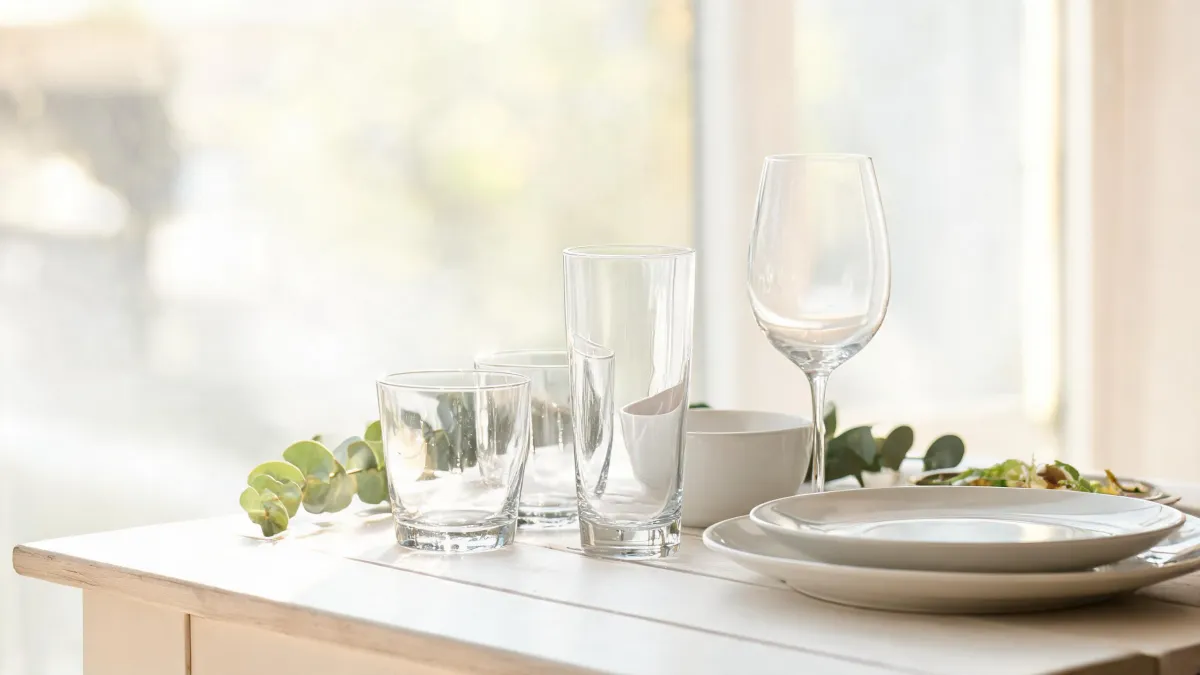
Picture a Saturday in late spring: you've invited eight friends over for a backyard cocktail party, the playlist is sorted, and the grill is about to come alive. You reach into the cabinet for glassware, and what you find is a jumble—two tumblers from a hotel promo, a rocks glass with a hairline crack, and a few wine glasses that have no business being used for whiskey. You need at least eight tumblers and four rocks glasses, you need them to survive an evening of clinks and drops, and you need them to look intentional on the table. That's the exact moment when 'glasses are glasses' stops being true, and the question of what to buy becomes a real decision. Suddenly, durability and design aren't abstract ideas; they're the difference between a smooth toast and an awkward scramble for a replacement.
A Backyard Party and the Glassware Question
Think back to the last party you hosted. The drinks were mixed, the music was on, and someone reached for a glass that felt too thin or too light in the hand. As Libbey puts it, when you gather friends and family for a meal, you’re not just making food and drinks—you’re making memories. The glass in someone's hand is part of that memory. If it cracks on the first toast, the moment shifts; if it feels solid and looks clean, the evening feels more put together. You don't want to be the host passing around a collection of mismatched cups that quietly undermine the care you put into the cocktail list. You want every glass to feel deliberate, from the weight on the pour to the rim that meets the lips. So the real question before you is practical: what kind of glassware earns its place in your cabinet for nights like this?
The need is not just a headcount, nor is it about having a matching set that makes you apologize for the glassware. For a gathering of eight to ten, you want a set that covers the two most-used shapes: a tumbler for cocktails and a rocks glass for whisky or old fashioneds. You also want a design that doesn't clash with your table, and a weight that says 'I can survive the dishwasher and the occasional knock.' Libbey's own website describes its products as 'beautiful, durable products for the home,' which is exactly the pairing you're after. It's not about having the fanciest stemware; it's about having eight glasses that all feel like they belong together and that won't make you wince when someone sets one down a little hard. That functionality is the baseline for any set you'll use weekly, not just for holidays. When you're setting up for a party, the last thing you want is a moment where you have to explain why the glasses are chipped or mismatched; you want the table to speak for itself. That's why the set you choose becomes part of the memory, not just a container for the drink.
So now you're facing the trade-off, and it's sharper than it looks. On one side, there's the cheap set that promises eight glasses for less than a pizza, but almost guarantees you'll be rebuying within a year because a chip appears or a base cracks. On the other, there's a set that costs more up front but comes with a brand story that claims to outlast your dinner parties. The decision feels like a math problem, except the numbers aren't just dollars—they're years of use, number of parties, and the cost of replacing a broken glass mid-gathering. Which one wins when you're standing in the aisle, comparing price tags? The answer, as it turns out, comes down to understanding what makes a glass actually durable—and why that durability matters more than the initial cost. And that understanding, once you have it, changes how you read every label in the glass aisle.
Comparing Glassware: What Actually Matters in a Rocks Glass and Tumbler Set
When you start comparing tumblers and rocks glasses seriously, the specs multiply: capacity, rim thickness, base weight, whether it's dishwasher safe, and how it feels in your hand. Beauty and durability turn out to be the two categories that matter most. Beauty is about design—does the glass look like it belongs on a stylish bar cart or in a modest cabinet? Durability is about material and construction—will it survive the fridge, the dishwasher, and the occasional bump? Add price to the list, and you have a simple matrix. The mistake most buyers make is comparing only price and capacity, which is why cheap sets keep selling, even though they crack, cloud, or feel flimsy within months. So the first question to ask yourself isn't 'How many glasses?' but 'What am I willing to replace?' If the answer is 'as few as possible,' you're already on the path to a different kind of purchase.
Durability isn't just about thickness; it's about how the glass is made and what it's designed to withstand. A glass that's annealed properly and made from quality soda-lime or tempered material can handle thermal shock and drops better than one that's been churned out as cheaply as possible. Capacity matters, too: a rocks glass holds around 8 to 10 ounces, perfect for a single pour over ice, while a tumbler runs 12 to 16 ounces for mixed drinks. But even the right capacity won't save you if the glass chips on the second wash. So when you evaluate a set, you're really asking: does it look good enough to leave on the counter, feel solid enough to trust in someone's hand, and come from a maker who's accountable for its quality? Those three questions separate a purchase you'll forget from one you'll still be using in a decade. And once you frame it that way, the criteria stop being a checklist and become a standard for the entire decision.
Durability vs. Style: How Libbey Balances Both
Libbey's own durability claim is the hinge of the whole argument. In its brand materials, the company says its tabletop solutions are 'durable enough to withstand the busiest bars and wildest backyard barbecues.' That's not a vague promise; it's a specific scenario that matches your party. The same source says that with proper care, its products 'can last a lifetime.' Think about what that does to your cost-per-use calculation. A $30 set that lasts five years? A $30 set that lasts forty years? The lifetime claim turns a small purchase into a long-term asset, which is exactly what you want when you're stocking glasses for home entertaining. It also reframes the risk: the real cost isn't the price tag, it's the inconvenience of a glass cracking in the middle of a toast and having to scramble for a replacement. This isn't just a marketing line; it's a promise that the next party, and the one after that, will go smoothly. Libbey's construction, refined over generations, is what makes that promise feel credible. The weight of each glass, the finish of the rim, the even walls—these are the tangible signals of a product made to last.
Style matters more than you might think, and Libbey ties its design to a mission that predates your party. The company describes itself as serving 'the makers of drinks, the makers of meals and the makers of memories' since 1818. That phrase is a reminder that glassware isn't just a vessel; it's part of the ritual of gathering. A good design should feel balanced in the hand, have a rim that's comfortable to drink from, and a base that doesn't wobble. Libbey's Hoops pattern, with its subtle horizontal bands, gives the glass a tactile, slightly decorative look without being loud. It's the kind of design that works for both a casual backyard beer and a more formal bourbon pour, which is precisely the flexibility a 16-piece set needs to justify itself. That mission, carried across two centuries, means the design isn't an afterthought; it's a response to how people actually live and entertain. When a glass looks good and feels right, you don't have to think about it—you just use it, and that's the point. And because it's tied to the idea of making memories, the design carries a meaning beyond mere decoration.
Two Centuries of Proof: Why the Libbey Heritage Changes the Calculation
The history alone nudges the decision. Libbey has been making glass since 1818, which the company is happy to remind you is 'over 200 years' of continuous tableware production. That longevity is not an accident. It means generations of drinkware engineers have refined the formulas, the annealing processes, and the quality checks that go into every piece. When a brand survives two centuries, it's because it has had to keep earning the trust of both commercial bars and home users. For a buyer trying to decide between a cheap set and a heritage brand, that track record is the evidence that the durability claim isn't just advertising copy. It's a pattern of behavior that has persisted through wars, recessions, and changing tastes. And it's worth noting that Libbey's own story, as told on its site, is about more than survival—it's about a commitment to 'provide the finest tableware' for everyone who makes a drink or a meal. That commitment shows up in the glass itself: the rim is smooth, the walls are even, and the weight feels consistent. You don't get that consistency from a factory that's chasing the lowest bid.
The decisive piece of evidence, though, is the lifetime claim. Libbey states that with proper care, its products 'can last a lifetime.' That single sentence reframes the economics. A budget set at $20 may seem like a bargain, but if it cracks or clouds after two years, you're back to buying another $20 set, and another. Over a decade, you've spent $100 and still have no reliable set. With the Libbey Hoops 16-piece set, you pay more once, and the lifetime claim gives you a reasonable expectation that you won't need to replace it in the foreseeable future. The same source that shows Libbey's 'made to last' message also ties the product to the idea of setting the table for life's great moments—because a glass that survives is one you can build memories around, not just drink from once and toss. That's the calculation that turns a cost-conscious shopper into a return customer. It's not about spending more; it's about spending once. And the evidence comes from Libbey itself, which has every incentive to underpromise and overdeliver on a claim it has to honor for decades.
Back to the Party: The Verdict on the Libbey Hoops Set
Back in that backyard, the decision is made. You've chosen the Libbey Hoops 16-piece set, and the difference is visible before the first pour. The glasses have a reassuring heft; they clink with a solid ring, not a thin tinkle. As guests arrive, you hand out tumblers for the Aperol spritzes and rocks glasses for the bourbon, and you notice that nobody pauses to check if the glass is chipped or feels cheap. The evening moves without a glassware crisis. Someone sets a glass down too hard near the edge of the table; you brace, but it doesn't break. Another friend wants to refill, and the glass still looks as crisp as it did at the start. The next morning, when you load the set into the dishwasher, you're not holding your breath about a crack. You're just planning the next party, already confident that this set will be there when you need it.
The verdict, then, is not about being loyal to a heritage brand for nostalgia's sake. It's about a simple decision rule: choose the set that minimizes the total cost of owning it—not just the price on the tag, but the cost of replacements, the inconvenience of breakage, and the lost polish of an event interrupted by broken glass. Libbey's own framing, that gathering people to share a meal is about making memories, is the final nudge. If you want the memory to include the drinks and the conversation rather than a cracked shard on the patio, you need glassware you don't have to think about. The Libbey Hoops 16-piece tumbler and rocks glass set gives you that. It covers the two workhorse glass types, it looks good enough to leave on the bar cart, and it's backed by a two-century-old promise of durability. That's why it earns its place in your home.
As the last guest leaves and the lights go down, you catch a glimpse of the glasses stacked in the rack—solid, clean, ready for the next time. That's the feeling you're really buying.

Ingrid Falk
Ingrid Falk is an outdoor living products analyst specializing in fences, pergolas, gazebos, canopies, greenhouses, shade sails, patio sets, outdoor sofas, and weatherproof cushions. She uses ISO 4892-2 and ASTM G154 weathering methods while comparing UV color change, coating adhesion, corrosion resistance, frame load, joint stability, water shedding, and dimensional movement. Her work helps garden retailers, project buyers, and hospitality operators select structures and furniture suited to wind exposure, climate, installation method, maintenance, and expected occupancy.
Leave a Reply