Libbey Hoops 16-Piece Tumbler and Rocks Glass Set: Built for Backyard Parties
Picture this: it's a warm July evening, and the backyard is full of friends and family. You've just unpacked a fresh set of glasses for the barbecue, but within an hour, one of them slips from a hand and shatters on the patio stones. The laughter pauses for a moment, someone fetches a broom, and the party continues with one less glass. If you've hosted a summer gathering, you know the scene. You also know the quiet worry that follows: is the glassware on your table something you trust, or just something that looks nice until the first bump? The choice between a cheap pack of generic tumblers and a set with a real name behind it feels heavier when the alternative is sweeping up shards in front of guests. This is the kind of moment that separates a fleeting purchase from a lasting one. And when you're the one who has to restock, the question changes from 'which design fits my table' to 'which glasses can take the noise of a real party and still look good on a Tuesday morning.' It's a tension that plays out in kitchens everywhere, and it usually ends with someone settling for either looks or durability. This article walks through why that compromise is false, and why a 16-piece set with two distinct glass styles can resolve it.
A Summer Night, the Old Glasses Shattered
Picture this: it's a warm July evening, and the backyard is full of friends and family. You've just unpacked a fresh set of glasses for the barbecue, but within an hour, one of them slips from a hand and shatters on the patio stones. The laughter pauses for a moment, someone fetches a broom, and the party continues with one less glass. If you've hosted a summer gathering, you know the scene. You also know the quiet worry that follows: is the glassware on your table something you trust, or just something that looks nice until the first bump? The choice between a cheap pack of generic tumblers and a set with a real name behind it feels heavier when the alternative is sweeping up shards in front of guests. This is the kind of moment that separates a fleeting purchase from a lasting one. And when you're the one who has to restock, the question changes from 'which design fits my table' to 'which glasses can take the noise of a real party and still look good on a Tuesday morning.' It's a tension that plays out in kitchens everywhere, and it usually ends with someone settling for either looks or durability. This article walks through why that compromise is false, and why a 16-piece set with two distinct glass styles can resolve it.
The moment the glass breaks, the party doesn't stop. You sweep it up, pour another drink, and the conversation picks back up. But the memory of that small crash lingers, especially if you're the host. Libbey, a company that has been making tableware since 1818, puts it simply: when you gather friends and family to share a meal, you're not just making food and drinks, you're making memories. That line from their home page is more than a slogan. It reframes what a drinking glass is supposed to do. A glass isn't just a vessel for liquid; it's a prop in the memories you're creating. If it breaks at the worst moment, it becomes the memory. And if it holds up, it disappears into the background, letting the evening stay about the people and the food. That's why the choice of glassware matters more than it seems. When you're deciding between a $10 pack of disposable cups and a set that costs a little more, you're actually deciding what kind of memory you want to build. The cheap cups might survive the evening, but they won't survive the summer. And they definitely won't become something you pull out for a quiet Tuesday dinner.
Durability Before Looks: The Standard That Changed My Thinking
Before I look at style, I look at survival. The first standard I apply to any set of glasses is simple: can it take a bump without turning into a hazard? Libbey's own words set the bar. Their tabletop line is described as 'Made to Last,' and they say it's 'durable enough to withstand the busiest bars and wildest backyard barbecues.' That sentence changed how I evaluate glass. It gives you a concrete image: a bartender moving fast behind a crowded bar, a kid knocking a cup off a patio table, a grill master reaching across the table with tongs. A glass that survives those moments isn't just tough; it's quietly invisible. You stop worrying about it and start enjoying the meal. That's the real value of durability. It's not about showy toughness; it's about removing the low-level anxiety that follows fragile things. When I pick up a glass and feel its weight and see the thickness of the rim, I'm not looking for heft—I'm looking for the confidence that it won't betray me at the first sign of life. And that confidence, once established, lets me evaluate everything else with a clearer head.
Why does a 200-year history matter when you're buying a 16-piece set for your kitchen? Because durability is a claim that needs evidence, and history is the evidence that can't be faked. Libbey has been making tableware since 1818, and their own story says they've been doing it for over 200 years. That number isn't just a badge; it's a survival test. A company doesn't stay in business for two centuries by selling glasses that shatter on the second rinse. It survives by learning what breaks, what chips, what feels wrong in the hand, and then fixing those problems in the next generation of product. When you see 'Since 1818' on a box, you're not just seeing a date; you're seeing millions of meals, thousands of bars, and countless backyard parties that tested the product before you did. That long history also means the company has witnessed how people actually use glassware—not in a lab, but in real homes and commercial kitchens. So when they make a claim like 'Made to Last,' they have two centuries of accumulated knowledge behind it. For me, that converts a marketing phrase into an engineering promise.
From Plastic Cups to No-Name Glass: The Difference Isn't Just Price
Now let's look at the actual alternatives you're weighing. On one end, there's the disposable plastic cup. It's cheap, maybe a few cents each, and you can throw it away at the end of the night. But you know the downsides: they feel flimsy, they sweat condensation all over the table, and they crack or blow away in the wind. More importantly, they send a message that the gathering is temporary, a quick cookout rather than a real dinner. On the other end, there's the no-name glass from a big-box store. It might look fine in the aisle, with a decent shape and a price that undercuts any brand. But once you get it home, you notice the rim is uneven, the base is thin, and after a few weeks in the dishwasher the surface looks scratched. The real cost isn't the price tag; it's the replacement cycle. You either buy another set next year, or you live with a drawer full of mismatched glasses that don't hold up visually or physically. What you're actually paying for with a brand like Libbey isn't the logo—it's the engineering that comes from decades of making glasses for restaurants, where breakage is a direct cost. A commercial-grade glass isn't just thicker; its shape distributes stress better, and its finish withstands repeated washing. When you bring that into your home, you're buying the knowledge of a company that has seen everything from a slammed bar counter to a dropped cup on a patio.
The evidence that convinced me to move beyond the cheap options comes straight from Libbey's own description: their products are 'durable enough to withstand the busiest bars and wildest backyard barbecues, with the proper care, our products can last a lifetime.' That sentence appears again and again in their materials, and it deserves attention. Break down what it says: first, it acknowledges the extremes—bars and backyard barbecues are where glasses get knocked, dropped, and hurriedly washed. Second, it introduces the condition 'with proper care.' No glass is indestructible; even a commercial-grade tumbler will break if you hit it with a hammer. But the claim is that with normal use and reasonable handling, it won't fail you at the first sign of chaos. That's a much more honest and useful promise than 'unbreakable.' It tells you that the glass is built to survive the worst evening you can reasonably host, and then also to sit quietly in your cabinet for years. For me, this shifts the economic calculation. A set of sixteen glasses that costs a little more upfront, but lasts a decade, is cheaper than buying cheap glasses every summer. And when you factor in the cost of replacing a broken glass mid-party—not just the price, but the disruption—the durable option wins even faster.
The 16-Piece Logic: Tumblers and Rocks Glasses Each Earn Their Place
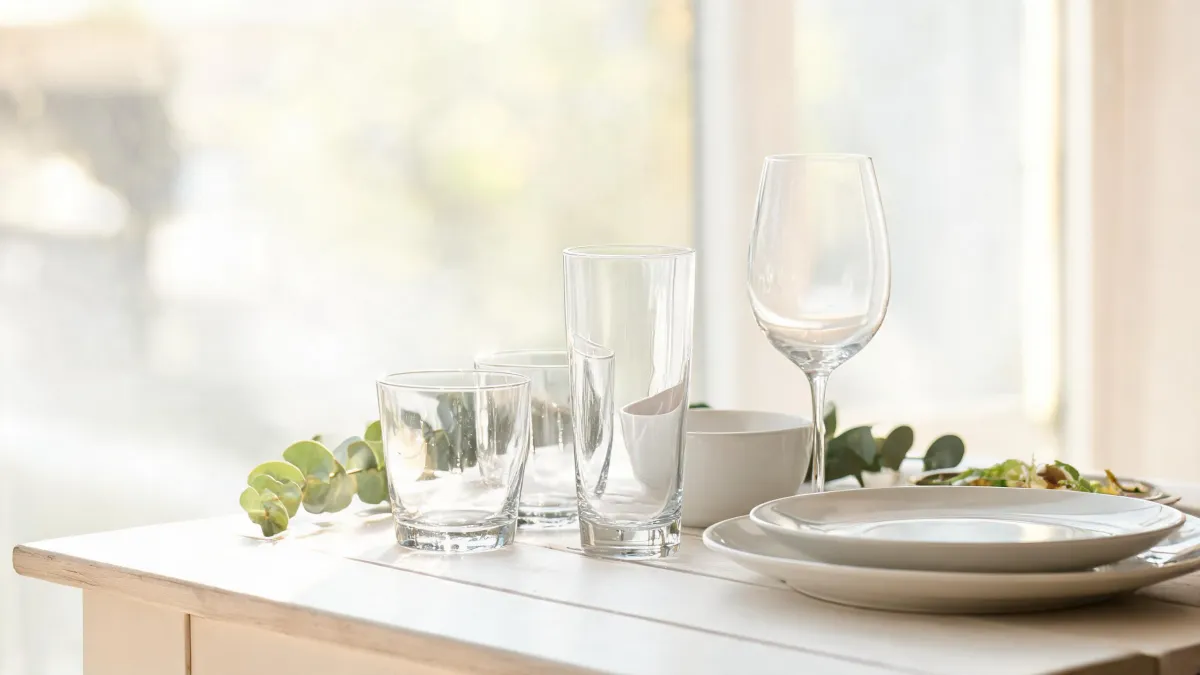
The Libbey Hoops 16-piece set doesn't just give you sixteen identical glasses. As the name suggests, it's a combination of two styles: tumblers and rocks glasses. In a typical configuration, you get eight of each, though exact counts can vary by retailer. The tumbler is the taller glass, the one you reach for when you want water, iced tea, lemonade, or a generous pour of soda. Its straight or slightly tapered sides make it stable on a table, and its capacity—usually around 12 to 16 ounces—fits the daily drinks of a household. The rocks glass, on the other hand, is shorter and wider, with a heavy base. It's designed for spirits: whiskey, bourbon, or a cocktail served over ice. The wide opening releases aromas, and the thick base holds up to the weight of a muddler or the clumsiness of a toast. Having both in one set means you're not reaching for a water glass when a friend asks for a whiskey, or pressing a stubby rocks glass into service as a water tumbler and watching it feel out of place. The set's logic is that two shapes cover the vast majority of what happens in a home: long drinks and short drinks, everyday hydration and evening wind-downs. That division of labor is what turns a pile of glasses into a coherent set.
You can see the set's logic in action at the kind of gathering it's designed for. Consider this: a weekend lunch with your parents, where your father asks for a water to go with his meal, and your cousin wants a small pour of bourbon after. You pull out the tumbler for the water and the rocks glass for the bourbon, and suddenly the table feels set, not random. Libbey's phrase 'life's great moments' might sound grand, but it's precisely these small, repeatable moments—the weekday dinner, the birthday toast, the Sunday afternoon coffee—that the 16-piece set is meant to serve. Their home page says, 'Set the table for life’s great moments with our beautiful, durable products for the home.' That's a reminder that the product's job is to be present for daily life without breaking or looking tired. The fact that the set has enough glasses for a full dinner party (eight tumblers for water or iced tea, eight rocks for anything stronger) also means you're not rushing to wash cups mid-party. And when the evening winds down, the same glasses that survived the barbecue can be stacked neatly in the cabinet for Tuesday's oatmeal and orange juice. That's the home moment the brand is talking about—a single set that moves from party to weekday without a costume change.
Back to That Summer Night: Is This Set Worth It?
So, back to that summer night. Is the Libbey Hoops 16-piece set worth buying? My answer is yes, for most households. The decision rests on the evidence we've walked through. The set pairs a 200-year-old company's durability promise with a design that covers both daily water and evening short drinks. When Libbey talks about setting the table for life's great moments, it's not an abstract idea; it's the glass you hand to a friend who just walked in the door, the one that doesn't break when someone bumps the table during a toast, the one that looks as good on a Tuesday as it does at a barbecue. In my view, the purchase makes sense when you're tired of the cycle of cheap glasses that chip, cloud, or shatter. I'd rather spend a little more now and have a set that I don't think about replacing for years. The 16-piece count is also right for a family of four or for someone who hosts a small gathering once or twice a month. It's enough to serve everyone without constant trips to the dishwasher, and the two glass shapes mean you're never forcing the wrong glass into a task. That alignment between need, design, and durability is why I'd recommend it.
That said, this set isn't for everyone. If you're a professional bartender running a high-volume cocktail bar, you'll likely want a dedicated commercial line with even heavier walls and replaceable inventory. And if you rarely serve alcohol and only need a few glasses for everyday water, a smaller set might be simpler. The Hoops set earns its place when you want one solution that covers daily use and occasional gatherings without doubling your cabinet contents. Here's the rule I use: buy this set if you've ever hosted a party where you ran out of clean glasses, or if you've ever winced when a guest dropped one of your nicer glasses. If those moments don't ring true, you might not need sixteen glasses. But if they do, the Libbey Hoops set gives you a single, durable answer. It closes the summer night story the right way: the glass that broke in the opening scene has a replacement that looks the same, feels solid, and won't turn the next memory into a cleanup project.
The summer night ends with the table still full, and the glasses that held the drinks wait quietly for the next gathering.

Ingrid Falk
Ingrid Falk is an outdoor living products analyst specializing in fences, pergolas, gazebos, canopies, greenhouses, shade sails, patio sets, outdoor sofas, and weatherproof cushions. She uses ISO 4892-2 and ASTM G154 weathering methods while comparing UV color change, coating adhesion, corrosion resistance, frame load, joint stability, water shedding, and dimensional movement. Her work helps garden retailers, project buyers, and hospitality operators select structures and furniture suited to wind exposure, climate, installation method, maintenance, and expected occupancy.
Leave a Reply