The Libbey Hoops 16-Piece Set: 16 Glasses Built to Earn Their Place
-
The Cookout Test: When a 16-Piece Set Has to Prove Itself
-
Two Centuries of Tabletop: What the Libbey Name Adds
-
What Other Kitchen Reviews Get Wrong About Choosing Glassware
-
The Real-Use Decision: Tumblers, Rocks Glasses, and the Life of the Set
-
Verdict: Who Should Put the Hoops 16-Piece Set on Their Table
You've just pulled the last burgers off the grill, and the cooler is already being raided for sodas. The tablecloth is scattered with plates, and someone is calling for a glass for the lemonade. This is the moment a 16-piece glass set stops being a spec sheet and becomes a decision. As you reach into the cabinet, the question isn't whether the glasses look good in the listing photo—it's whether they'll survive the ice, the grip of a guest who's also holding a burger, and the dishwasher cycle tomorrow morning. A thin, cheap glass will make the same first pour look fine; the difference shows up on the third or fourth round, when a chipped rim or a hairline crack turns a pleasant afternoon into a cleanup project. Libbey frames these moments plainly: when you gather friends and family to share a meal, you're not just making food and drinks, you're making memories. The glassware in your hand is part of that memory, which is why the choice feels heavier than a simple purchase. You're not just buying capacity for drinks; you're buying the confidence that the table won't embarrass you mid-party.
The Cookout Test: When a 16-Piece Set Has to Prove Itself
You've just pulled the last burgers off the grill, and the cooler is already being raided for sodas. The tablecloth is scattered with plates, and someone is calling for a glass for the lemonade. This is the moment a 16-piece glass set stops being a spec sheet and becomes a decision. As you reach into the cabinet, the question isn't whether the glasses look good in the listing photo—it's whether they'll survive the ice, the grip of a guest who's also holding a burger, and the dishwasher cycle tomorrow morning. A thin, cheap glass will make the same first pour look fine; the difference shows up on the third or fourth round, when a chipped rim or a hairline crack turns a pleasant afternoon into a cleanup project. Libbey frames these moments plainly: when you gather friends and family to share a meal, you're not just making food and drinks, you're making memories. The glassware in your hand is part of that memory, which is why the choice feels heavier than a simple purchase. You're not just buying capacity for drinks; you're buying the confidence that the table won't embarrass you mid-party.
The table is the quiet center of every gathering. It's where the food lands, where the conversation drifts, and where the drinks get set down hard after a joke lands. A glass that feels flimsy in the hand changes how you host—you start hovering, warning people to be careful, and the ease of the evening drains away. That's why the Libbey positioning matters more than it first appears. The brand doesn't sell drinkware as single pieces; it sells the setting for life's great moments, and it has been doing so since 1818. For the home host, that heritage translates into a simple promise: the glass is designed to be durable enough for high-volume bars and rowdy backyard parties, yet appropriate for a weeknight dinner. When you set the table for a cookout, you want glassware that behaves like it belongs there—not something that feels precious when the salsa arrives.
So the real question becomes practical rather than sentimental. A 16-piece set is a commitment of cabinet space and cash, and the price-per-glass math looks flattering on paper. But the value only holds if the set matches how you actually serve. A set of tumblers for water, soft drinks, and iced tea, plus rocks glasses for whiskey, cocktails, and stronger pours—that split covers the two shapes a home bar really needs. It's easy to assume every glass set is interchangeable, but the ratio of shapes changes how often each glass gets used. If the set gives you eight tumblers and eight rocks glasses, it lines up with a typical party menu unlike an all-tumbler bundle. The question, then, is whether the Libbey Hoops version executes that mix well enough to justify the space it will take up. That's the test the rest of this walkthrough applies.
Two Centuries of Tabletop: What the Libbey Name Adds
Why should a since-1818 founding date affect a decision you make in 2026? In most product categories, heritage is marketing noise. But for glassware, provenance is a proxy for something concrete: Libbey has made drinkware through every era of commercial dining, from soda fountains to cocktail bars. That track record means the design choices—rim thickness, foot stability, weight distribution—have been stress-tested by generations of professional use. The excerpt from Libbey's own materials puts it in direct terms: since 1818, it's been their mission to provide the finest tableware for the makers of drinks, the makers of meals, and the makers of memories. Over 200 years of that work is not a decoration on the box; it's a signal that the tumblers in front of you inherit lessons from barrooms and diners that had to be durable enough to survive constant handling.
Libbey's own story ties those two centuries directly to the moment you're hosting. The brand positions its tabletop solutions as a top choice for both foodservice professionals and home entertainers, and the reason given isn't aesthetics—it's durability. The phrasing matters: durable enough to withstand the busiest bars and wildest backyard barbecues, and with proper care, able to last a lifetime. It's the kind of claim a commercial buyer would hold the company to. A restaurant ordering dozens of glasses per week can't tolerate a product that chips on first impact. The fact that Libbey leads with that durability across its professional and home lines changes how you should read the Hoops set: you're not buying a party pack of fragile glass, you're buying the same engineering premise used in high-volume settings, sized for your kitchen cabinet.
What Other Kitchen Reviews Get Wrong About Choosing Glassware
Yet that engineering premise gets buried the moment you shop by the vocabulary of kitchen-product reviews: airtight, leak-proof, vacuum seal, BPA-free. Those are the criteria that make sense for food storage containers, where the fear is soup spilling into a gym bag. A review might praise a 5-piece, 3.2-cup set for its dual latches and silicone gasket, because the whole point is keeping curry in the container. But when you move from food storage to drinkware, that mental checklist gets misleading. A glass doesn't need a gasket; it needs to sit stable, take temperature swings, and let you see the drink clearly. The Rubbermaid Brilliance review's emphasis on '100% airtight and leak-proof' is a perfect example of a quality signal that transfers poorly. If you carry that mindset to a drinking glass, you might find yourself checking for the wrong thing—a seal that a tumbler will never have—and ignoring the actual failure modes: chipping, cracking, or thinness.
The same comparison logic appears in head-to-head assessments of food containers, where buyers weigh 'the guarantee that your chicken curry will not spill everywhere in your laptop bag.' That's a valid concern for meal prep, but it points elsewhere. The equivalent questions for a tumbler are: does it feel substantial? Does it survive the dishwasher? Does the stack fit in the cabinet? And does the shape match the pour? The Hoops set answers those with a straightforward structure—tumblers for the daily drinks that make up most of your glassware use, rocks glasses for the shorter, stronger pours at a party. Clarity matters too: a glass that stays clear and resists spots does more for the table than one with a fancy lid. The storage-first logic of food containers would ask about nesting and lids; the drinkware test is about whether the glass disappears into the experience instead of becoming a distraction.
That's the pivot. Judged against drinkware criteria—durability, balance, clarity, and a shape mix that matches real serving—the Libbey Hoops 16-piece set checks out. The piece count stops being the headline and becomes a consequence of having enough tumblers and rocks glasses for a table full of people. What matters is that the set is built for repeated use, and that the ratio supports the way you actually pour. If you buy it for the sheer number of glasses, you may end up with a cabinet of rarely used pieces; if you buy it because it fits your serving pattern and the glass feels like it can take a knock, the count is just a bonus. That's the difference between a warehouse deal and a tabletop decision.
The Real-Use Decision: Tumblers, Rocks Glasses, and the Life of the Set
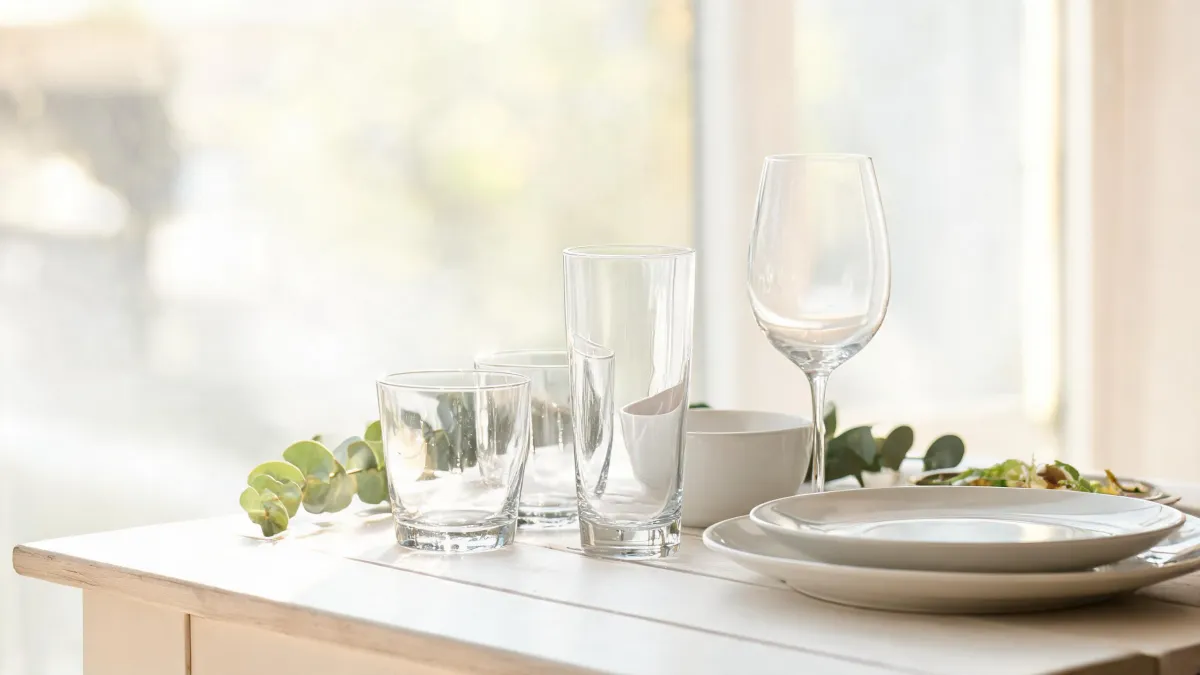
Run the set through an average week. On a Tuesday, you pour water or iced tea into a tumbler; it's tall enough to hold a decent pour, stable enough to sit next to a plate, and uncomplicated. Friday rolls around, someone asks for whiskey, and the rocks glass comes out—short, thick, comfortable in the hand, made for a pour that doesn't need a straw. At a party, the tumblers handle the soda and lemonade crowd while the rocks glasses handle the cocktails and neat pours. Eight and eight is a ratio that covers both ends without leaving half the cabinet unused. The question isn't whether 16 pieces is enough—it's whether those 16 pieces are the right ones. If your household mostly drinks water and coffee, you'll reach for the tumblers far more often; if you entertain with spirits, the rocks glasses earn their keep. The set's flexibility is what makes the 16-piece count defensible.
Here is where durability stops being a buzzword and becomes the deciding factor. Libbey says its products are built for the rough-and-tumble of commercial service and outdoor parties—and, with ordinary care, they can last a lifetime. That's a strong pair of claims, and it's backed by a 200-year history of making tableware for people who can't afford breakage. The company's own page connects that history to a modern workplace that carries 'the resources and insights that come with a 200-year history'—meaning the engineering knowledge is baked into the product, not just the marketing. For a home buyer, the translation is simple: a set that survives commercial use will not flinch at a backyard party. You're not buying glass that will last one season; you're buying glass that could still be in your cabinet after a decade of cookouts, and that reframes the initial cost.
The non-obvious rule that emerges is about fit rather than value-per-piece. A glass set is only worth the cabinet space it takes if it matches your serving habits. If you regularly throw a mix of drinks at a gathering, the tumbler-rocks split is exactly right. The hidden value is durability: a cheap set that chips after six months gets replaced, which means you're actually paying more per usable pour. A set that lasts a decade spreads its cost across hundreds of meals and parties. So instead of asking 'is $X for 16 glasses a good price?', the better question is 'does this glass survive the way I host, and does the shape mix fit the drinks I serve?' When both answers are yes, the purchase stops being a gamble.
Verdict: Who Should Put the Hoops 16-Piece Set on Their Table
The verdict for most home entertainers is a clear yes. If you host cookouts, game nights, or even a steady stream of weeknight dinners, the Hoops 16-piece set gives you a durable, well-proportioned glassware solution that doesn't pretend to be crystal. It belongs on tables where drinks get refilled and glasses get knocked. The boundaries are just as clear: if you primarily serve stemware-style pours or expect the thin-walled elegance of leaded crystal, this isn't that set. And the 'with proper care' clause matters—dishwasher use is fine, but you'll get the advertised lifetime only if you treat the glass with ordinary respect. For anyone who wants a no-fuss glass that looks presentable and stands up to real use, the Hoops set earns its place in the cabinet.
Back at that cookout, the glasses come down from the cabinet and make it through the evening—lemonade refills, a spilled soda that gets wiped up, a toast that nearly misses the table. Nobody thinks about the glassware, which is exactly the point. Libbey's framing comes back around: the meal and the drinks are just the setup; the people around the table are the point. The Hoops set doesn't need to be the star of those memories; it just needs to stay out of the way while they happen. When the night ends with the dishwasher loading up, the glasses still look like they'll be there for the next one. That's the real test, and the set passes it.
The lasting picture: a table full of glasses that never demanded attention, a set that returned to the cabinet intact, and a host who stopped worrying about breakage weeks ago. The Libbey Hoops set earns its place not by being the most expensive or the most delicate, but by being the glassware you can forget about while the evening does its work.

Ingrid Falk
Ingrid Falk is an outdoor living products analyst specializing in fences, pergolas, gazebos, canopies, greenhouses, shade sails, patio sets, outdoor sofas, and weatherproof cushions. She uses ISO 4892-2 and ASTM G154 weathering methods while comparing UV color change, coating adhesion, corrosion resistance, frame load, joint stability, water shedding, and dimensional movement. Her work helps garden retailers, project buyers, and hospitality operators select structures and furniture suited to wind exposure, climate, installation method, maintenance, and expected occupancy.
Leave a Reply