Mikasa Alyssa 40-Piece Bone China Set: Does It Fit Your Table?
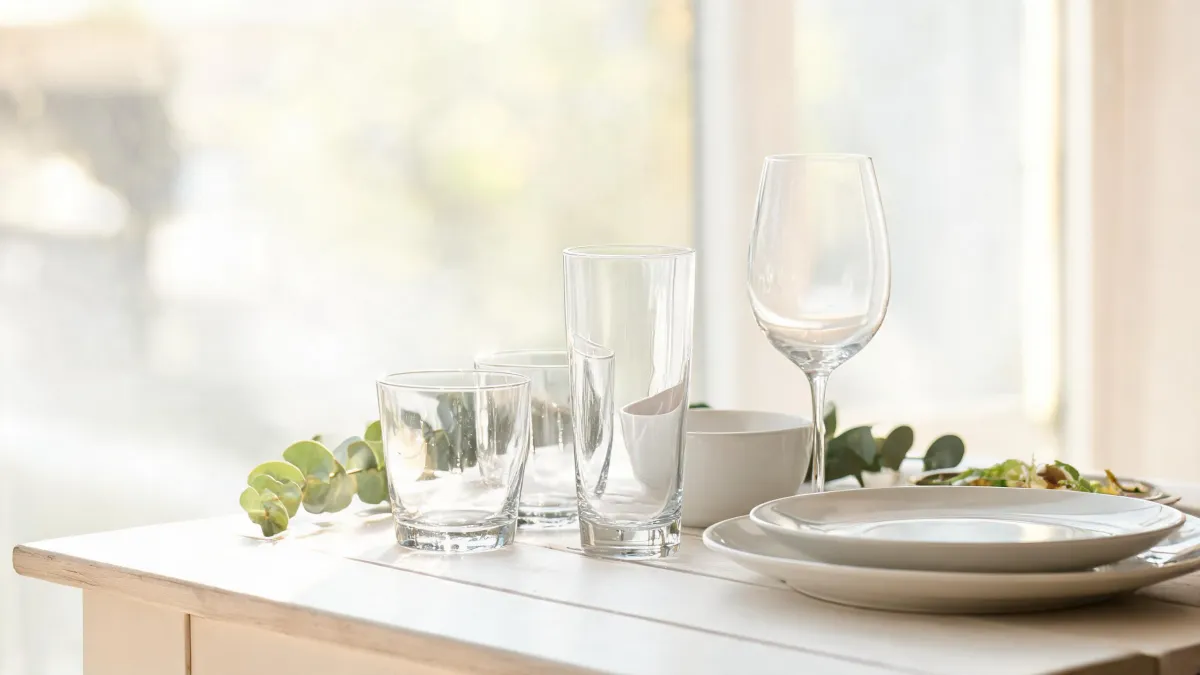
The box on your porch is heavier than it looks, and what's inside will force a decision. You slice the tape and lift out ten dinner plates, ten salad plates, ten bowls, and ten mugs — a 40-piece bone china set from Mikasa that seems to answer every table-setting question at once. But as you stack the plates, you wonder whether forty pieces actually fit the way you live.
The Box Arrives: What to Ask First
It's a Tuesday evening, and you've just set the table for four: four dinner plates, four salad plates, four bowls, and four mugs. The other pieces of the 40-piece set sit in the china cabinet. You realize that a 40-piece set doesn't necessarily mean forty meals' worth of plates; it means a certain number of place settings plus serving pieces. For a family of four, the set might be exactly right — or it might be more than you need if you rarely entertain. You think about the weekend ahead: six guests for dinner, and suddenly you're calculating whether the set can stretch. The serving bowls and platters come out, and you realize the set was designed with hosting in mind, not just daily meals. The real question isn't the total count, but how the set's configuration maps to your household. So before you decide to keep it or send it back, you need a framework for evaluating material, service count, and buying context.
So what should you actually ask before committing to the Mikasa Alyssa 40-piece bone china set? Start with the material: is bone china sturdy enough for daily use, or is it strictly for special occasions? Then move to the service count: how many people does this set really serve? And finally, consider the buying context: does shipping, selection, and price make this the right move now? The answer to all three will tell you whether the set is a practical middle ground for your home or just a beautiful collection of maybes. Mikasa's catalog is weighted toward four-person services. The bottom line is simple: this set is a practical middle ground for a household that wants bone china's everyday elegance without assembling a set piece by piece, but the fit depends entirely on your service count and how often you host.
Bone China 101: Why the Material Matters
Bone china gets its name from the bone ash mixed into the clay, which gives it that translucent glow and a strength that surprises people who think it's fragile. Mikasa's catalog lists 207 bone china products, a significant portion of the lineup, which tells you the material isn't a niche option; it's a core part of what the brand builds. That depth matters because it means a bone china set like the Alyssa isn't a one-off — it's a shape that sits within a larger family of pieces you can add to later. But the real question is whether bone china can survive a busy kitchen. In practice, quality bone china is fired at high temperatures, making it more durable than everyday porcelain, though it still needs care around sudden temperature changes. The Alyssa pattern, with its classic silhouette, is designed to go from casual breakfast to formal dinner without skipping a beat.
The numbers behind Mikasa's catalog reinforce the material's role. You'll find 51 dinner plates, 56 salad plates, 47 soup-cereal bowls, and 38 mugs listed individually — evidence that bone china isn't just for complete sets; you can build a service piece by piece if you need to. More importantly, the catalog shows 125 dinnerware services for 4, versus only 21 for 8 and 5 for 6. That asymmetry tells you where Mikasa's audience sits: most people shop for a household of four. So when you're considering a 40-piece set, the catalog is quietly telling you that the mainstream configuration is four place settings plus serving pieces, not an eight-person banquet. That's why you should read the service count rather than the total piece count. The service count is the number that tells you how many seats you can fill; make it your starting point, not the advertised piece total.
Reading the Service Count: 40 Pieces, How Many Dinners?
So what does 'service for 4' actually mean? It means the set includes enough pieces to set a table for four people — typically a dinner plate, salad plate, bowl, and mug per person, with additional serving pieces rounding out the count. Mikasa's catalog makes this explicit: you'll see Dinnerware Service for 1, 3, 4, 6, and 8, each representing a different number of place settings. Among those, Service for 4 (125 options) dwarfs Service for 8 (21 options). In practical terms, that means a service-for-4 set gives you roughly ten pieces per place setting: dinner plate, salad plate, bowl, mug, and often a bread plate or tea cup. A set for 8 would need to be roughly double that, so you're unlikely to find one at this count. The total piece number matters less than how the set is divided.
Let's put that into a real week. Monday through Thursday, your table holds four place settings — four dinner plates, four salad plates, and four bowls. Friday, you have six people over, and suddenly you're pulling out the serving platters and extra bowls that came with the set. If the set is a true service for 4, you'll have enough for the family plus a few extra pieces for hosting, but not a full second set. Those counts suggest four is the magic number for most Mikasa customers. If your household is actually six or eight, a 40-piece set will feel tight on the dinner plates, no matter how beautiful the bone china is. That's why you should count your own chairs before you count the pieces in the box. The set is designed for the mainstream, and your family may not be it.
Buying Context: Shipping, Selection, and Fit
Buying context matters as much as the set itself. Mikasa's site currently offers free shipping on orders over $40, which means a full 40-piece set easily clears that threshold — no need to pad your cart to qualify. That shipping perk lowers the cost of entry, especially if you're comparing against sets that tack on a delivery fee. It also makes the one-time buy more attractive than collecting pieces slowly, since each small order would have to meet the same threshold. The practical question is whether you're ready to commit to the whole set now, or whether you'd rather add pieces over time. If you're leaning toward the full set, the shipping promotion removes one argument for waiting. And with $40 as the bar, even a starter set or a few replacement pieces can come without delivery costs.
The catalog's breadth is another purchase signal. Within bone china alone, you can find individual replacement pieces for every component of the set. That means if a piece breaks, you have a realistic chance of replacing it rather than abandoning the whole set. It also means you could theoretically build the set piece by piece, but doing so would likely cost more per piece and take longer than buying the set outright. Complete sets are clearly the brand's focus, and the 40-piece configuration is a middle ground: larger than a basic 16-piece starter set, but not as sprawling as a 60-piece service for 12. For most households, that middle ground is exactly the right size.
Back to the Table: Your Verdict
The Tuesday dinner scene is the real test. You set the table for four and watched the rest of the set wait in the cabinet. If the 40-piece set covers your everyday meals and your occasional gatherings without leaving you scrambling for plates, it's a fit. If you're a couple who rarely hosts, you might find yourself staring at twenty unused pieces. If you're a family of six, you'll wish the set had more dinner plates. So when you close the cupboard door, ask yourself which side of that scene you're on. The set's value isn't in the total count; it's in how well the service count matches the number of people you actually feed. If it matches, you've found your set; if not, keep looking.
So here's the rule: decompose any dinnerware set into place settings and serving pieces before you let the total piece count impress you. For the Mikasa Alyssa 40-piece bone china set, that decomposition points to a four-person service with extras for hosting. For a household of four that entertains occasionally and wants bone china's everyday elegance without assembling a set, this is that middle ground. That puts you in good company. Choose it for the service count, not the piece count, and you'll know exactly what you're bringing to your table. It's a practical middle ground, but only if your service count matches your dinner table. That's the difference between owning forty pieces and using forty pieces.
That box on your porch isn't just dinnerware; it's a question of how you host. Now you've got the answer — or at least the rule to find it.

Ingrid Falk
Ingrid Falk is an outdoor living products analyst specializing in fences, pergolas, gazebos, canopies, greenhouses, shade sails, patio sets, outdoor sofas, and weatherproof cushions. She uses ISO 4892-2 and ASTM G154 weathering methods while comparing UV color change, coating adhesion, corrosion resistance, frame load, joint stability, water shedding, and dimensional movement. Her work helps garden retailers, project buyers, and hospitality operators select structures and furniture suited to wind exposure, climate, installation method, maintenance, and expected occupancy.
Leave a Reply