Libbey Paneled Tumblers: 200 Years of Durability in a Six-Pack
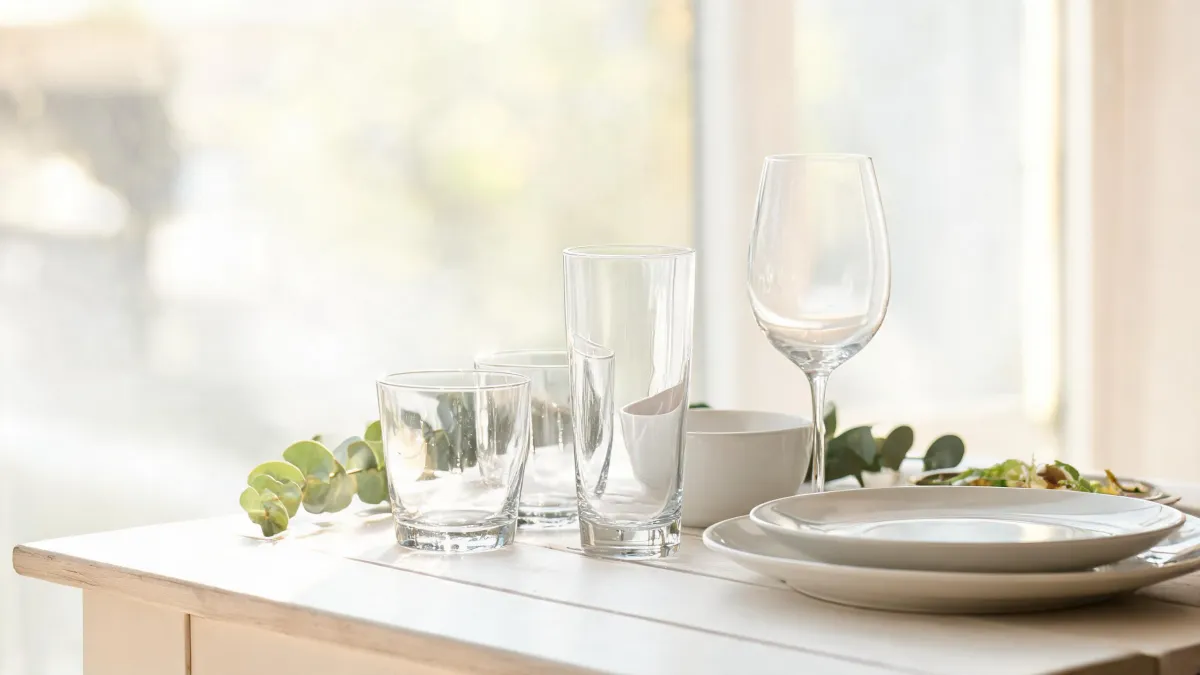
Most glassware sets ask you to choose between durability and style. I'd argue Libbey's paneled tumbler set of six refuses to make that trade—and that's why it's a smarter buy than most flimsier or pricier alternatives. With a 200-year-old brand behind it and everyday durability baked into the design, it's exactly the kind of glass you can stop worrying about.
The Case for Libbey's Paneled Tumblers
Libbey's marketing copy opens with a promise: "Set the table for life's great moments with our beautiful, durable products for the home." That line is easy to dismiss as puffery, but it actually frames the brand's entire design philosophy—beauty and durability are meant to coexist. My read is that Libbey doesn't see these as disposable party props; they're meant to be the glasses you reach for on a random Tuesday, at a birthday barbecue, and when you're just pouring water after a workout. The company's positioning around 'life's great moments' suggests they expect their products to be present in the unglamorous, repeated routines of home, which is exactly where most glassware fails. That stance is why I'm willing to give the set a serious look despite its modest price. It also matters that the quote comes from a company that has been making tableware for more than two centuries—when a brand with that history talks about 'beautiful, durable products,' it isn't guessing; it's describing what it's had to deliver to restaurants and bars to stay in business.
The common assumption is that a moderately priced six-pack is thin, fragile, and destined for the recycling bin within weeks. That assumption ignores what foodservice-grade construction actually means. A glass that's built for a bar isn't just thicker; it's engineered to survive thermal shock, aggressive dishwashing, and the occasional drop onto tile. The paneled tumbler set doesn't come with a fancy brand name or a crystal formula, and that's precisely the point—you're paying for tested resilience rather than aesthetic prestige. So before you write it off because of the price tag, ask yourself whether you've ever bought a cheap set that lasted, and whether the more expensive ones you've owned survived a single clumsy moment. Foodservice glassware is tested against a baseline that home drinkware never sees: thousands of cycles in a commercial washer, violent contact with other glasses, and the constant threat of being knocked off a counter by a tipsy customer. If you drop a tumbler on a restaurant floor, the staff doesn't debate whether to keep it; they sweep it up and pull a new one from the rack. That's the environment Libbey's 'made to last' claim is calibrated for. At home, you're never going to subject a glass to that kind of abuse, so a set that survives commercial duty will almost certainly survive your kitchen.
A 200-Year Track Record
Libbey has been making tableware since 1818. That isn't just a trivia fact; it's the longest-running field test in American drinkware. The company's own story says it has served 'the makers of drinks, the makers of meals and the makers of memories' for more than 200 years, and there's a reason foodservice professionals keep coming back: if a glass doesn't survive a single shift, the bar doesn't reorder it. A brand that has lasted this long in a business where glass breaks constantly has to be doing something right. That's not just a historical curiosity; it's a feedback loop. Every order from a foodservice buyer is a vote of confidence, and those votes have been coming in for over two centuries. If the glasses didn't hold up, bars and restaurants would have switched long ago. The fact that Libbey is still supplying them in 2026 tells me the utility is real, not just the marketing. For me, that history is a stronger durability signal than any thickness measurement or weight spec, because it reflects cumulative real-world failure data from the harshest end users imaginable.
The mission statement matters because it reveals what Libbey thinks it's selling. It doesn't say 'we make glasses'; it says 'we provide the finest tableware for the makers of drinks, the makers of meals and the makers of memories.' That's a subtle shift in perspective: the product is meant to be a participant in everyday rituals, not a centerpiece for special occasions. When a company frames itself around memory-making, it's implicitly promising that its glassware will be around long enough to be part of those memories. That's a different kind of durability—the kind that keeps you from replacing a broken glass a month after buying it. In other words, Libbey is selling the confidence that the glass you buy today won't be a memory itself next month. That promise only works if the product spends a long time in your cabinet.
What 'Made to Last' Really Means
Here's where the case locks in. Libbey claims its tabletop solutions are 'durable enough to withstand the busiest bars and wildest backyard barbecues.' That sentence is the turning point for me because it's not vague marketing; it names two concrete abuse scenarios. A working bar racks up thousands of touches a night, and a backyard barbecue is where glasses get knocked over by kids, dogs, and adults who've had one too many. If a glass can survive both, your weekday breakfast and weekend party have absolutely nothing on it. The company also says that with proper care, its products can last a lifetime—and that's a meaningful promise when you're comparing a twelve-pack from the discount store. And that's not a throwaway line. A lifetime claim from a company that has been around since 1818 is more credible than the same line from a brand you've never heard of. It means the company expects you to keep these tumblers through years of moves, dishwashers, and accidental drops. That's exactly the kind of confidence you want when you're spending money on six glasses that will sit in a cabinet with everything else.
In practical terms, this means the paneled tumblers are built for the way people actually live. They can handle being stacked in a cabinet, shoved into a dishwasher rack, and grabbed by a child with sticky hands. I also think the paneled surface is a quiet functional advantage: the ridges give your fingers a more positive grip, especially when the glass is wet or frosted. That's not a spec sheet feature, but it's the kind of thing you notice after a few weeks of daily use. If you're the kind of person who has ever watched a glass slip out of your hand because it was too smooth, you'll understand why that detail matters. The bevels aren't just for looks; they're a grip aid that works when your hands are wet, soapy, or wrapped around a sticky juice glass. It's a small thing, but small things add up when you're juggling a plate and a drink.
Paneled Design vs. Everyday Expectations
Now let's address the elephant in the room: the word 'paneled' makes some people think of cheap, pressed glass. That's a fair initial reaction, but it's also what Libbey is talking about when it positions its products for 'life's great moments.' The paneled design is actually rooted in classic barware, where faceted glass wasn't about decoration; it was about grip and refraction. The same company that talks about 'beautiful, durable products' for the home is the one that has supplied restaurants and bars for two centuries, so the design language carries a practical history. I'd argue the panels make the glass more interesting to look at without making it more fragile, because the bevels add structural rigidity rather than removing glass. Think of a ridged bottle versus a perfectly smooth one: the ridges give the object a little more surface area to absorb impacts, and they hide the inevitable small scratches that make perfectly flat glass look worn. That's why I read 'paneled' as a design choice with a function, not a cost-cutting flourish.
When you're standing in the aisle comparing this set to a crystal one, you're really deciding what you want from a drinking glass. Crystal looks better in the daylight and on an Instagram flat-lay, but it's frequently thin-walled, expensive, and prone to chipping if you look at it sideways. A cheap unbranded pack will do the job until the first one breaks—then you're chasing replacements. The Libbey set isn't trying to be the most elegant glass you own; it's trying to be the most reliable. If your priority is a clean, classic look that won't make you wince when someone clinks glasses too hard, this is that option. There's no point in owning a glass you're nervous to use. The whole point of a drinking glass is that it's the thing you grab without thinking, and that's exactly the niche this set fills. It's not jewelry; it's equipment.
The Bottom Line
The bottom line is that Libbey has earned the right to claim 'made to last.' The company has been in the tableware business since 1818, which means it has spent more than 200 years having its durability tested in commercial kitchens and bars. When it says its tabletop solutions can withstand the busiest bars and wildest backyard barbecues, that's not an aspiration; it's a description of what the products already do. My verdict is that the paneled tumbler set of six is a smarter buy than most flimsier or pricier alternatives, because it combines two-hundred-year-old craftsmanship with the kind of everyday resilience that actual households need. If you're outfitting a kitchen and want glasses that can survive the weeknight chaos without demanding kid gloves, this is the set I'd put in the cabinet. That's a strong claim, but it's a claim Libbey has spent centuries earning. Every chipped bar glass that never happened, every restaurant reorder, every backyard barbecue that didn't end in a broken glass is evidence—and for me, that's enough.
That verdict comes with boundaries. If you're shopping for formal entertaining where the table setting is the star, or if you need something delicate enough to feel like a special occasion, you should look elsewhere. And if you're expecting a hand-blown, lead-crystal feel, this will disappoint you. But if your real need is a set of six glasses that will survive daily use, occasional drops, and the dishwasher, while still looking presentable when friends are over, the Libbey paneled tumblers fill that gap better than anything at this price. They're not a collectible; they're a workhorse with a classic shape, and that's exactly what most kitchens need. If you're the kind of cook who just wants a dependable glass that doesn't demand attention, this is it. And if you ever break one, replacing a single tumbler is far easier than replacing a matching crystal set.

Ingrid Falk
Ingrid Falk is an outdoor living products analyst specializing in fences, pergolas, gazebos, canopies, greenhouses, shade sails, patio sets, outdoor sofas, and weatherproof cushions. She uses ISO 4892-2 and ASTM G154 weathering methods while comparing UV color change, coating adhesion, corrosion resistance, frame load, joint stability, water shedding, and dimensional movement. Her work helps garden retailers, project buyers, and hospitality operators select structures and furniture suited to wind exposure, climate, installation method, maintenance, and expected occupancy.
Leave a Reply